
CITT News
The Road to Success CITT Alumni Series: Stacey Park
“When I started at the center as an RA, CITT played a key role in guiding me through my professional and personal growth. I'm grateful now to be in a position to pay it forward and offer that same mentorship to students so that they get the most out of their experience and go on to launch successful careers.”
- Ben Olson, CITT Research Associate
The Center for International Trade and Transportation (CITT) has a long history of working with highly driven and creative research assistants (RAs) from a wide range of disciplines who contributed their unique perspectives to research and projects in the transportation and logistics and workforce fields. Each research assistant makes a distinctive contribution to center activities and research as they take advantage of opportunities to grow both professionally and academically. These research assistants make an impact at the Center and then build on that momentum as they transition into their careers.
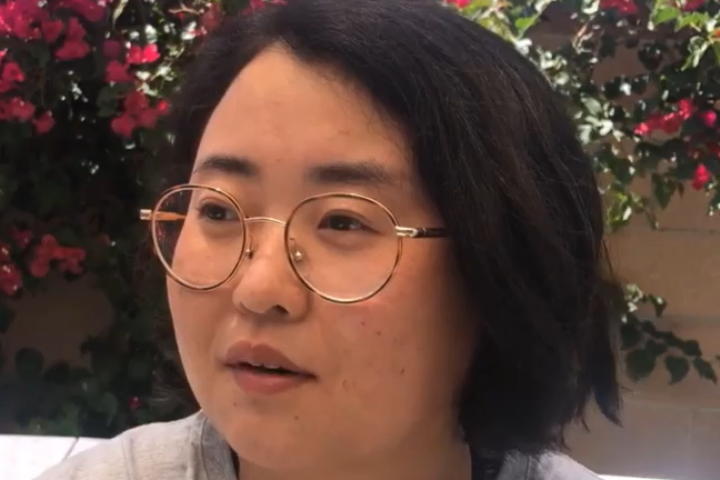
To showcase these CITT alumni, the editorial team has launched a “where are they now” series to spotlight the previous research assistants and the work they have done since graduating. We recently sat down with 2017-2019 Research Assistant Stacey Park to reminisce about her time at CITT and how that experience influenced her professional and academic life. Stacey is currently a Ph.D. student at Claremont Graduate University in the English department, co-Editor-in-Chief of Foothill Poetry Journal, and a Writing Consultant at CGU's Center for Writing & Rhetoric.
What areas/projects were you involved in at CITT?
I helped with all things editorial—METRANS News, CITT blogs/news, ad hoc copywriting /editing papers, articles, and so on.
How has CITT influenced you professionally?
CITT helped me see a great need for humanists in STEM fields and [also] how important transdisciplinary work is. It seems counterintuitive for a person with a literary and creative writing background to work at a research center dedicated to solving immense and widespread logistics issues; yet there are many opportunities for collaboration from diverse fields—especially as questions related to politics and ethics arise. I also think there is a great need for good writers and astute thinkers to come in and help STEM experts communicate their work for the public and other diverse audiences.
Could you describe a particular project, experience, or person at CITT that inspired you in some way?
I’d be remiss to not mention Tyler Reeb and the faith he had in me. I learned a lot about technical writing and how to pivot and see my skills as transferable for a variety of fields. He believed in me as a scholar and worker, and it’s always good to have a supervisor who you know is in your corner and rooting for you to succeed. I also have to shout out Deanna [Matsumoto] and Sue [Schildt], who always had great advice and interesting news or books to share with me. I’m sorry that this sounds like an award acceptance speech, and I’m sorry that I can’t shout out everybody, but the music is playing...
What is something you learned at CITT that you have carried into your professional life/career?
That humanists are needed everywhere. I believed and thought this before, but it was greatly affirmed at CITT.
What was your first full-time position after graduating from CSULB?
Being a student, again! Haha.
What are your professional goals or plans?
At the moment, I’d like to pursue an academic career, but I am also open to non-academic career paths.
What advice would you offer young graduates from your department?
Pursue a certificate or opportunities for technical writing.
If you could have dinner with any five people in the world, who would they be?
This is a tough question—at the moment, I’d say: Sandra Oh, Bowen Yang, Cathy Park Hong, Keeanga-Yamahtta Taylor, and Gayatri Chakravorty Spivak. I don’t think I’d want to have dinner with these people all at once--maybe I could have one-on-one lunches with them.
More Alumni Profiles More Staff Profiles More Student Successes