
CPaCE News
Arts Exec Improves Workplace Culture with Help from CSULB’s New HR Course
In Fall 2023, the Human Resources (HR) Management certificate program at CSULB launched a new course on the increasingly hot topic of Diversity, Equity, Inclusion & Belonging (DEIB).* Taught by program coordinator and instructor Stacey Lewis, a seasoned HR professional with over 30 years of experience, DEIB classes help people in any industry to gain awareness of— and have an influence on—their workplace culture. By analyzing the roles and responsibilities of HR, students learn about biases and microaggressions, hiring strategies, and effective plans to implement DEIB measures.
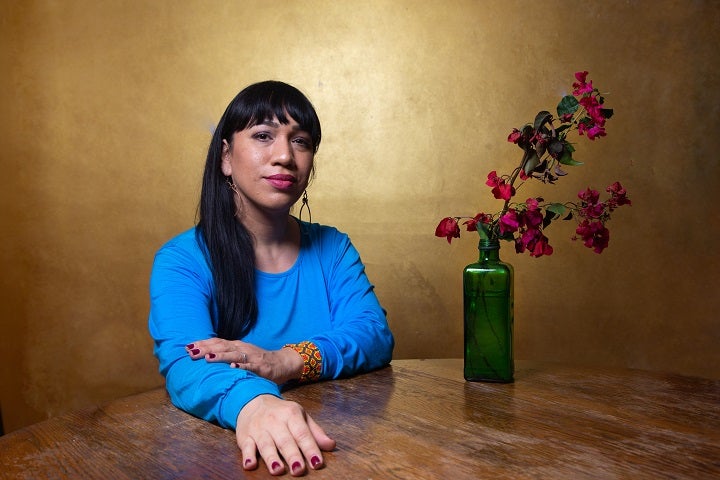
Writer and arts administrator Marytza Rubio became one of those students when she attended the DEIB course in November 2023, while working in a previous role as Vice President of Community and Culture at a performing arts center. Online classes in the evenings made it possible for her to attend the workforce training program, which was supported by her organization as it navigated changing times.
“My primary responsibility was to strengthen relationships and engage our communities through the arts,” said Marytza of her leadership role. “We intentionally defined community as both internal and external—to strengthen relationships and build trust in our neighborhoods, we need to be able to do that in the workplace.”
In addition to developing performances and programs on an outdoor stage, Marytza’s unique job also encompassed DEIB efforts across an interdepartmental working group, senior leadership council, and board committees. Her team provided educational workshops for their colleagues by drawing on their network of artists, DEIB professionals, and other experts from local communities. Wanting to gain a deeper understanding of how HR can support a more inclusive culture, Marytza enrolled in the CSULB course to seek the expertise of one of the top authorities in the field.
“I loved how Stacey said that ‘HR is the policy and DEIB is the practice,’” explained Marytza. “I strongly agree with that collective approach. Transformative work is a shared responsibility.”
“This course—particularly the instructor’s point of view—really appealed to me,” she continued. “Because my position was so tied to relationships, it gave me a basic understanding of the foundations of HR and a common vocabulary to understand my HR colleagues.”
As the performing arts industry faced disruption from the Covid pandemic, demands for justice from human rights campaigns, and evolving audience demographics, Marytza and her team had to address challenging questions while responding to a national backlash to DEIB. This required conversations about cultural awareness and how potential revenue influences artistic choices.
“The business case for DEIB gets brought up a lot in the arts, like ‘prove that this won’t ruin us.’ But that’s fear talking,” Marytza explained. “There’s money in diversity if you see it as an asset instead of a liability. For example, you’re going to sell out a cumbia show if you are familiar with the music and have a thoughtful understanding of the 1 million people of Latin American descent living right outside the venue. That’s where the internal work comes in.”
“I think that this model of having an artist and arts administrator design internal DEIB efforts, while also determining artistic programming, is particularly powerful,” she continued. “I led this work internally, and then my team put that work into practice by ensuring that Black, Brown, Queer, and Disabled artists—and all community members—felt respected and celebrated anytime they came into our venue.”
Stacey guided Marytza and her classmates through a crash course in the history of workplace advancements that were often tied to social movements, including the Civil Rights Act, Title 9, Title 7, and the Americans with Disabilities Act (ADA). These laws expanded the parameters for workplace protections, allowing more people who were not previously protected to earn status and financial independence. As a result, their perspectives began to inform broader decisions that impacted various industries as well as society at large.
“Stacey was an incredible instructor whose honest and open teaching style helped me understand that these workplace efforts have been around for decades,” Marytza said. “I know that the acronyms can trip people up or make them feel left out, but wanting to be paid fairly for your work and given tools to feel safe and supported is just basic human decency. This people-first approach tends to keep turnover low, morale high, and business profitable because employees feel like their careers are in good hands.”
“What still stands out to me is Stacey’s reminder that the guiding principle when making difficult decisions is to avoid causing harm,” Marytza added. “It is a simple yet urgent directive.”
“This course would be beneficial for anyone in the workforce today to have a better sense of their rights as workers, and to learn simple yet effective tools to navigate workplace tensions,” Marytza continued. “It was grounding, informative, and gave me confidence. I appreciated the case studies and the history of DEIB in the workplace as a reminder that there will always be pushback against inclusivity—yet the work continues.”
While Marytza resigned from her position earlier this year, resistance to DEIB programs continues in fields ranging from higher education to the entertainment industry.
“Without a diversity of perspectives and lived experiences reflected in our workplace or on our stages, our culture is incomplete,” Marytza stated. “This creates a deficit of narratives, which ultimately limits understanding of our shared humanity.”
Learn more about the HR Management program at CSULB.
*Please note that many institutions refer to DEIB programs by alternate terminology such as Equity, Diversity, and Inclusion (EDI) or Inclusion, Diversity, Equity, Accessibility (IDEA).
More Alumni Profiles More Community Outreach More Student Profiles