
CPaCE News
New MAIA Program Director Brings Fresh Perspective to Global Issues
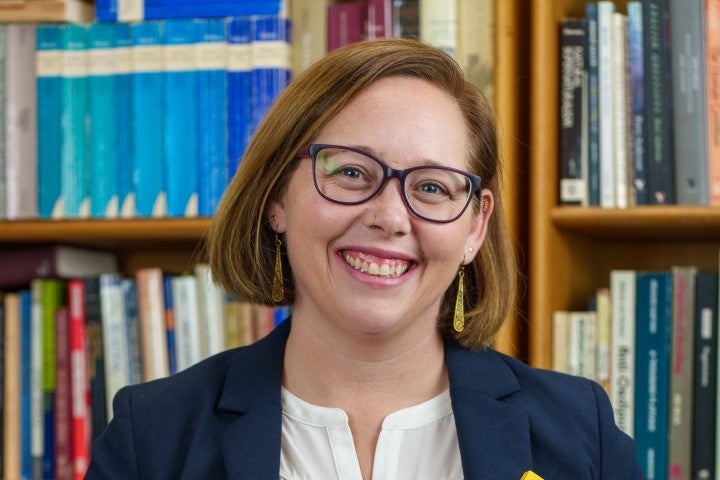
As the world becomes more interconnected every day, people and nations are shifting along with a dynamic set of complex trends in climate, economics, and politics. Borders and immigration are especially pressing issues, particularly in Southern California, which includes two major ports as well as a global array of trades, cultures, and languages.
The Master of Arts in International Affairs (MAIA) program, led by new program director and longtime instructor Caitlin Fouratt, is guiding students from a variety of academic and professional backgrounds to thrive within, between, and across these borders. There are currently about 40 students in two MAIA cohorts who are benefiting from the program’s unique location and the expertise it draws upon. A wide range of instructors, each with their own specializations, demonstrate how classroom theory and practical skills can be utilized in many different careers.
“This year, my goals are to focus on building connections,” Caitlin said. “Not just among students, but also with our recent graduates, who are amazing resources for current students.”
As a cultural anthropologist with bilingual abilities, Caitlin’s work focuses on the impacts of the asylum process on migrants and refugees. Her ethnographic approach is grounded in an understanding of the lived experiences of people who are most affected by these policies. This understanding informed Caitlin’s 2022 book, Flexible Families: Nicaraguan Transnational Families in Costa Rica, which examines the struggles among migrants to maintain family bonds across borders. It was based on years of engagement with affected communities, plus a working knowledge of the roles that International Affairs professionals play in government agencies.
“This insight has helped spark discussions with students about how to apply the theories they’re learning in class to the professional world, as well as to challenge them to imagine how they might change the systems of power within which they’ll be working,” she explained.
While this is her first semester as director, Caitlin has been teaching in the MAIA program since it launched in 2020. Her courses as an instructor include Migration & Modernity and Global Trends in International Migration. The latter class featured guest speakers such as a private practice immigration lawyer, a CSULB alum working on refugee resettlement projects, and a representative from the International Organization for Migration’s Missing Migrants’ Project.
“[That class] was both very intense academically and a wonderfully creative space,” she said. “We had amazing conversations comparing what students were learning about the U.S. immigration system to how asylum and immigration policies work in other countries.”
In addition to a year’s worth of online and in-person classes, the MAIA program offers internship and job training opportunities in California and Washington, D.C. as well as abroad in other countries. Some of Caitlin’s International Studies courses ask students to critically reflect on these internships and study abroad experiences including the program in Costa Rica that Caitlin helped launch in 2020, which now invites up to 25 students every semester.
Going the extra mile to support students in need, Caitlin is also a co-founder and academic advisor for the CSULB Dream Success Center. Inspired by the initial efforts of student activists, she began working with a group of committed faculty and staff in 2016 to increase capacity for assisting undocumented students. They successfully advocated for new staff and expanded programming while securing CSULB President Conoley’s commitment to fund renewals for Deferred Action for Childhood Arrivals (DACA).
“We also revamped the UndocuAlly training and engaged in conversations across departments, colleges, and divisions about how best to support our undocumented and immigrant students,” Caitlin explained. “Today, the Dream Success Center is a vibrant home for our students, with mentoring programs, scholarships, meeting space, and more.”
“I love working with students to figure out their individual path forward,” she continued. “It’s always exciting to sit down with students and think through what they want to do in the future and how we can best prepare them for success.”
Learn more about the MAIA program at CSULB.
More Instructor Profiles More International Education More Study Abroad