
CPaCE News
Collegiate Partners CPaCE and COE Work Together to Support Job Training Agencies
Guest post by CPaCE Associate Dean Tom O'Brien
It’s likely that the least known and perhaps least understood College within CSULB is the College of Professional and Continuing Education (CPaCE). CPaCE works with campus, business, community, and international partners to offer a diverse range of degrees, professional development certificates, and short-and long-term international education programs. As a College, we are most visible when partnering with other academic units, assisting them with the development, marketing, and administration of self-support degree programs. We also play an important role in connecting the campus to external partners who can help us better understand the needs of employers—not only for degrees, but also non-degree credentials. Partner input also helps us better align the changing demand for skills in the workplace with the education programs offered on our campus. All of this allows CPaCE to contribute in unique ways to the broader mission of the university and the goals of the Beach 2030 strategic plan.
In the 2022-23 academic year, CPaCE-related enrollment in for-credit, professional, and specialized or customized programs totaled more than 29,000 students. These include enrollments in Summer Sessions and Open University seats, the American Language Institute, and a wide range of professional programs in areas as diverse as crime and intelligence analysis, global logistics, human resource management, and bio manufacturing applications.
Another area of CPaCE activity is in transportation-related research and training, including providing support to the Port of Long Beach and Long Beach Unified School District for the Academy of Global Logistics (AGL) at Juan Rodriguez Cabrillo High School. CPaCE’s work for AGL involves curriculum development and industry coordination for this unique Port-supported four-year pathway in logistics. Like the large majority of transportation-related projects in CPaCE, AGL is coordinated through the Center for International Trade and Transportation (CITT), which receives a large majority of its funding from the U.S. Department of Transportation, Caltrans, and a number of other organizations. Last year, CITT received over $2.8 million in awards to support research on our campus, and the development and piloting of workforce training programs.
One of CPaCE’s and CITT’s key partners in the area of transportation is the College of Engineering (COE), which in 2023-24 enrolled nearly 6,200 students in 12 different degree programs at the undergraduate and graduate level, and secured $7.1 million in funded research. The two Colleges have worked together on a number of projects including COE’s BS degrees in Mechanical and Electrical Engineering offered by CSULB in the Antelope Valley. CPaCE, through its Office of Professional and Workforce Development (OPWD), has also provided grant support for a zero-emissions vehicle training program led by COE faculty.
In two other areas, the COE and CPaCE partnership most effectively demonstrates the potential value to the University and the State of strategic collaboration between an academic college and a professional and continuing education unit. Since 2018, the College of Engineering and CPaCE have led CSULB’s efforts as part of the California State University Transportation Consortium (CSUTC) at Mineta Transportation Institute. CSUTC is a group headed by the Mineta Transportation Institute at San Jose State University and includes CSU Chico and Fresno State, in addition to CSULB. The CSUTC generates research and workforce training programs using funds generated by California’s Senate Bill 1, which supports the improved mobility of people and goods while strengthening the State's economy.
CSUTC projects have involved researchers on 14 campuses. In the first six years of the program, CSULB has been awarded funding for 66 of the CSUTC’s total of 198 projects—more than any other single campus. These projects reflect the diversity and strengths of our two colleges, with Engineering faculty undertaking valuable research in the areas of automated truck platooning, vehicle-generated wind energy for electric power generation, and performance testing of hot mix asphalt, among others. CPaCE and CITT have drawn upon our strengths in applied freight research and workforce development for projects that range from the development of a GIS in Transportation curriculum for a middle school summer program, to an assessment of Best Practices for recruitment and retention of the transportation and highway construction workforce. The combined skills and approaches of our two colleges help COE and CPaCE demonstrate our leadership in transportation research, education and training across the educational continuum and across the State.
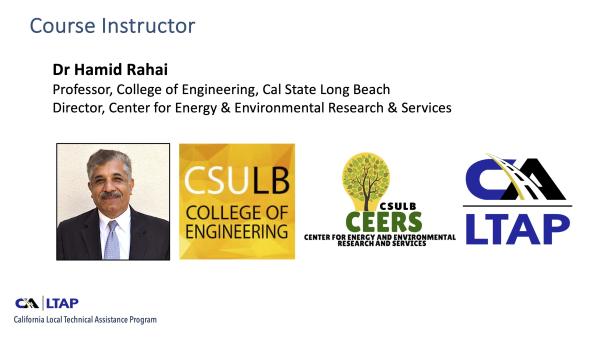
I have supported the College of Engineering’s Hamid Rahai in his role as CSUTC lead for our campus. We have a similar partnership in the California Local Technical Assistance Program (CALTAP), this time with CPaCE and CITT taking the lead. Like the CSUTC, CALTAP is also part of a broader network, this one national in scope. The LTAP program is managed by the Federal Highway Administration; has existed since 1982; and assists local, rural, and tribal transportation agencies by offering low-to-no cost access to workforce training and technical assistance. There is an LTAP Center in each of the 50 states and Puerto Rico.
In California, CALTAP is managed by Caltrans’ Division of Local Assistance (DLA) and the audience for local assistance in a state of our size is vast. CALTAP serves the state’s more than 600 local public agencies, including 58 counties and 482 municipalities, cities, regional transportation planning agencies (RTPAs), metropolitan planning organizations (MPOs), towns, special districts, and tribal communities. CITT administers the program, undertakes statewide needs assessments, manages the logistics of training, and coordinates with tribal governments on transportation-related training. We also design our own programming including classes that train non-GIS technicians how to use geospatial information systems for purposes of community outreach, among other local government responsibilities.
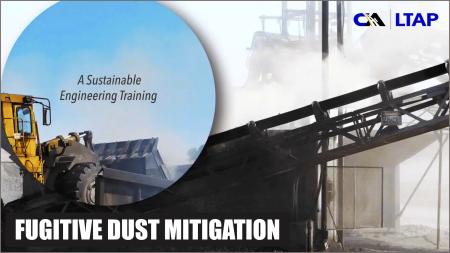
Trainings are a critical resource in training California's workforce. Dr. Rahai’s unique contribution has been in the development of a series of training modules that comprise the Sustainable Engineering Training Academy (SETA). SETA courses on the Environmental Impacts of Construction Projects, Fugitive Dust Mitigation, GHG Emissions Mitigation, and Renewable Energy have already been delivered, with more modules on the way.
Once again, our complementary strengths allow both CPaCE and the College of Engineering to support California’s local agencies in delivering training to their employees—in ways that are informed by our research and deep knowledge of both transportation and workforce development. The partnership is clearly one where the whole is greater than the sum of its parts. It reflects the potential for even more collaborative efforts and positions CSULB at the forefront of transportation research, education, and training—among not only the CSUs but also California’s colleges and universities in general.
More College Updates More Community Outreach More Trade & Transportation